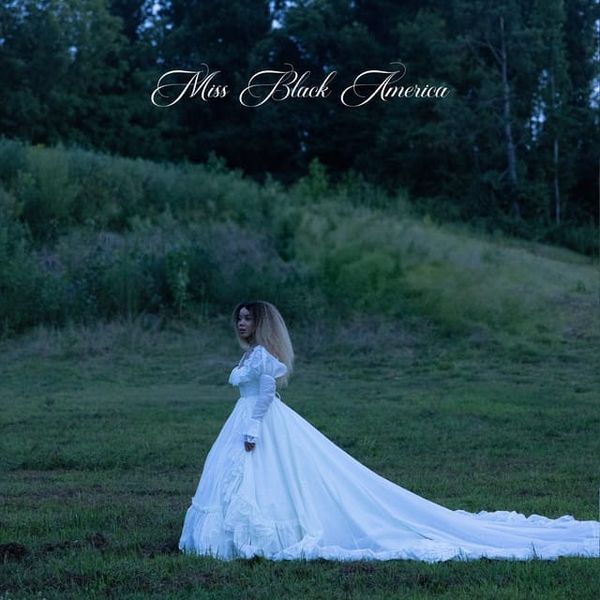
By calling herself the “granddaughter of soul,” Kirby is letting everyone know that she understands and embraces her inheritance. That she acknowledges the ancestors, like Fannie Lou Hamer, upon whose shoulders she now stands. And by making an album like Miss Black America, she is also putting the world on notice that remembrance and reclamation are part of the artist's duty in order to never let the still-owed reparations slip from the conversation.
Earmilk writes of this album, “It’s both a love letter and a ledger of what’s owed to the South — a place, a people, and a sound that built America from the ground up.” Indeed, Kirby's own forebears did some of that building by picking cotton. Her surname is Dockery from, yes, Mississippi's Dockery Plantation, the birthplace of the blues. Her version of those historical blues is simply set within a modern framework, to great effect.
Earmilk goes on to note, “There’s something refreshing about an artist who refuses to be misunderstood. ... Miss Black America doesn’t leave much to decode, but that’s exactly the point. She’s spoon-feeding listeners the meaning of this body of work because the message is meant to be front and center: This is a record about Black identity, Southern legacy, and the weight of pursuing your dreams despite the odds.”
In an age when so much R&B is overly slick and slinky, Miss Black America is gritty and grounded. Because of that, this particular revival, though absolutely brimming with human spirit, feels somehow more political, cultural, and even intellectual than spiritual. Of course, at this moment in history, for so many, all of those silos are collapsed into one, and Kirby seems to get that on a cellular level.
Hear the whole episode on April 29 at 6 am, 12 pm, and 6 pm PT.